Chronicles of Shipwrecks Famous, Infamous and Obscure
No one really knows precisely how many wrecks of passenger liners, schooners, barks, clippers, steamers, tankers, freighters, auto carriers, and other ships scattered on the sea bottom or rust on countless perilous reefs and coastlines around the world. The fact is that the exact number will never be known.
Some of those lost ships were famous for their elegant accommodations or admired for their elegant lines and speed, while most labored as virtually anonymous workhorses whose end on some rocky point or loss in a sudden storm garnered only a passing mention on the shipping page of some now forgotten newspaper.
Whatever the cause of their loss ─ collision, fire, allision, explosion, grounding, storm, or the mysterious unknown ─ each has had a story worth being told.
-
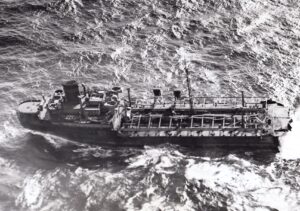
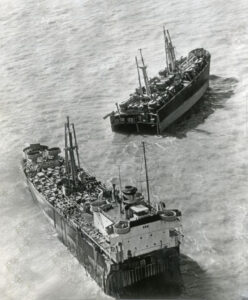
In February 1946, the stern section of the Russian tanker Donbass was recovered after the ship split in two in a Northern Pacific storm. Towed to the U.S. West Coast, the stern was later acquired by Pacific Gas & Electric and moved to Northern California where her working power plant was used to supply electricity to the City of Eureka for more than a decade.
-
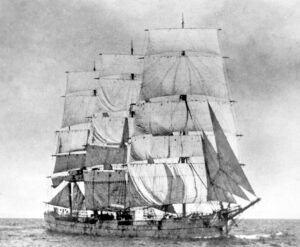
On the evening of September 8, 1900, the barque May Flint, called “the ugliest square rigger that ever sailed the seas,” sailed into San Francisco Bay and crashed the party being held to celebrate the 50th anniversary of California being admitted to the Union. Out of control and in front of thousands of awed witnesses, she went to the bottom in just 20 minutes after crashing into a U.S. Navy battleship and another ship anchored close-by.
-
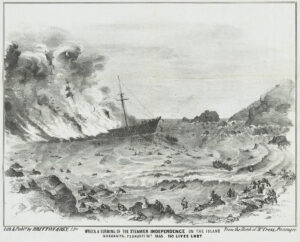
Bound from San Juan del Sur, Nicaragua, for San Francisco, the side-wheel steamer Independence struck a reef off the southern tip of Baka California, quickly caught fire and sank about 300 yards offshore. The estimates of the number of people lost in the wreck range from 130 to 175 men, women, and children in a tragic shipwreck that made headlines in both Europe and the U.S.
-
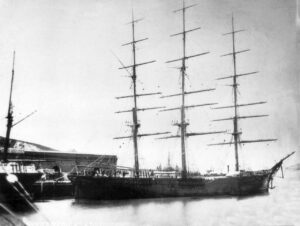
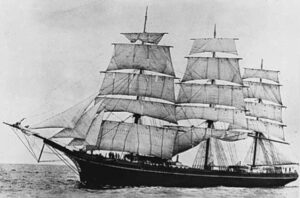
Launched as the Young America in 1853, the medium clipper was noted for “her beautiful lines and general handsome appearance……not exceeded by anything afloat.” She proved to be very popular with shippers, but, after three decades at sea, she was sold to Austrian interests and renamed Miroslav. In 1886, she sailed from Philadelphia, bound for the Adriatic port of Fiume, and vanished.
-
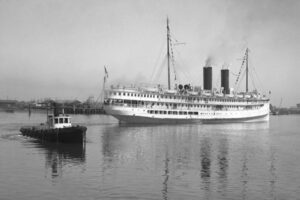
Flying the houseflag of the Los Angeles Steamship Company, the sleek coastal liner Harvard, and her sister, the Yale, plied the coast on overlapping sailings connecting San Pedro and San Francisco. The Harvard, once the pride of the coastal passenger liner fleet, was wrecked when she went aground on an even keel at Point Arguello, California, on the clear morning of May 30, 1931.
-
Anchored in Seattle harbor and loaded with a $500,000 cargo of canned salmon, the three-masted, full-rigged A.J. Fuller went to the bottom on October 30, 1918, after being rammed in a dense fog by a Japanese steamship. She sank in just ten minutes with a 10-foot-wide hole punched into her bow.
-
Named for the internationally famous, 19th-Century Polish-American stage actress and philanthropist, the Liberty-type freighter Helena Modjeska was wrecked in September 1946 when a tremendous gale drove her onto the treacherous Goodwin Sands off the coast of Kent in southeast England.
-
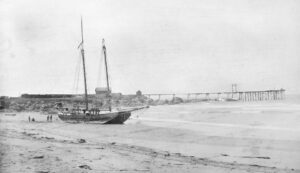
One of the hundreds of blunt-nosed, cargo-hauling scow schooners that plied San Francisco Bay and its smaller, attached bays in the late 19th and early 20th centuries, the scow schooner Mystery was caught in a terrific storm that struck San Pablo Bay in March 1907. Tragically, the small two-master was lost along with her captain, Damien Espinosa, and crew, his three daughters, Isabel, Jesucita, and Grace.