Harvard

The Harvard – and her twin sister, the Yale – were popular coastal passenger steamers that plied the route between Los Angeles and San Francisco on a four-trips-a-week schedule for the Los Angeles Steamship Co., a subsidiary of the Matson Navigation Co.
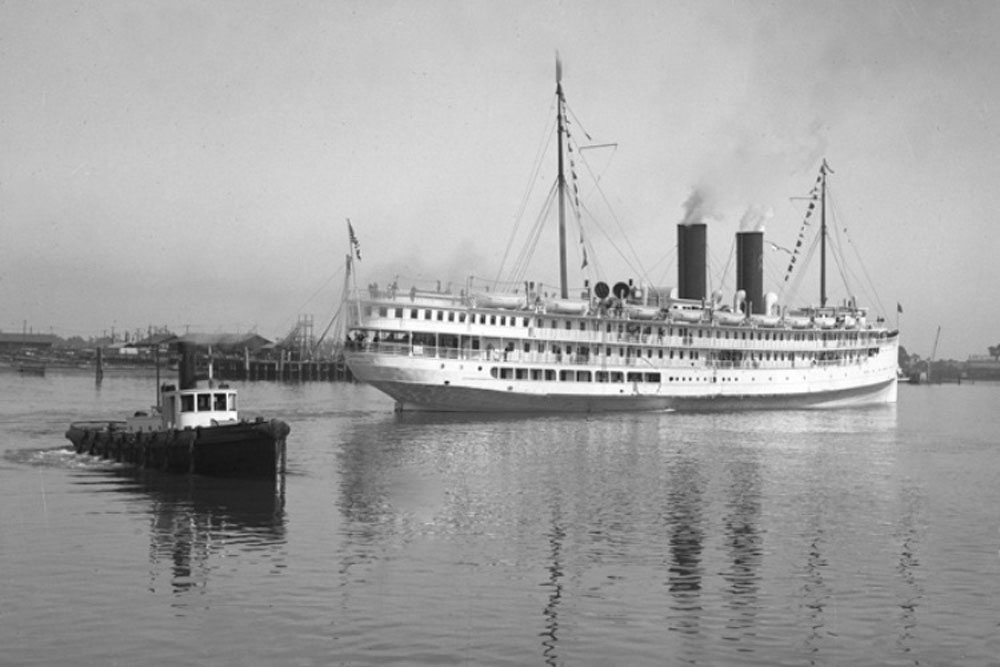
Harvard

    The turbine-powered ship served in World War I as the U.S.S. Charles ferrying troops between Southampton, England, and Le Havre, France.   

   For her war service, the Harvard was awarded corporal’s stripes, which were affixed to her forward funnel and remained there to her loss on May 30, 1931.

   She was steaming at 20 knots on her 972nd trip at 3:30 that clear morning when she went aground and settled on an even keel on the rocks only 100 yards off Point Arguello, about 60 miles north of Santa Barbara, California.

   Capt. Lewis Hilsinger, who was filling in for the Harvard’s regular master, ordered a distress call sounded and an SOS sent out immediately. Several ships responded including the freighter San Anselmo, which altered course to come to her aid, took her 500 passengers off and safely transferred them to the cruiser U.S.S. Louisville

    The entrepreneurial rancher who owned the property immediately fronting the wreck saw an opportunity to make a fast buck and reportedly made quite a killing by charging 50 cents a carload to curiosity seekers wanting to view the stranded ship. According to one account, between 20,000 and 30,000 cars took him up on his offer. 

   Theories abounded as to why the Harvard was wrecked with a negligent lookout, faulty steering gear, an exceptionally strong inshore current topping the list. Some theorists even alleged that the ship’s log had been altered to cover the fact that she was too close to shore.

   Whatever the case, the Harvard, once the pride of California’s coastal passenger fleet, soon broke up and was no more. Fifteen years before she was wrecked, she had rammed and sank the steam schooner Excelsior in San Francisco Bay.  

In an ironic footnote, the Harvard’s initial distress call was sounded on a steam whistle that had been salvaged from the Santa Rosa and installed on the Harvard’s aft stack. The Santa Rosa, another popular coastal passenger steamer, had been wrecked 20 years earlier also, ironically, at Point Arguello.
More Posts

  • Miroslav

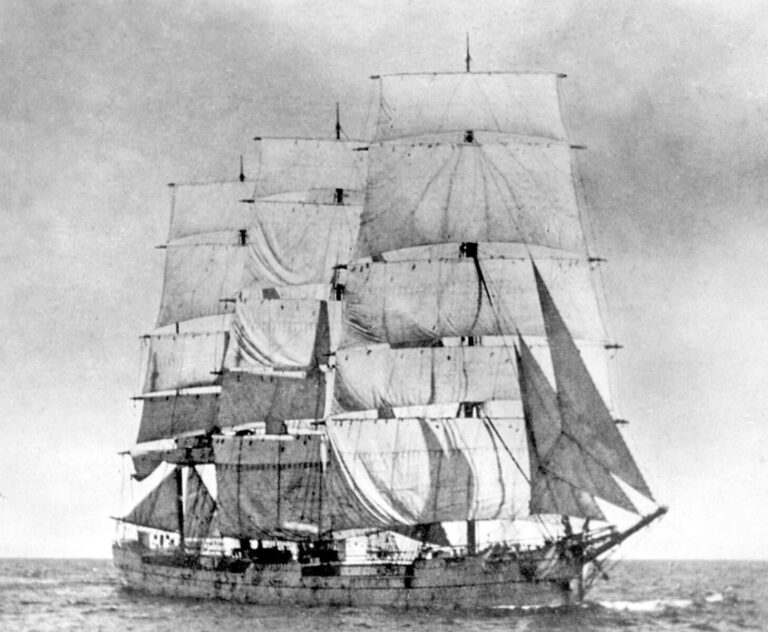
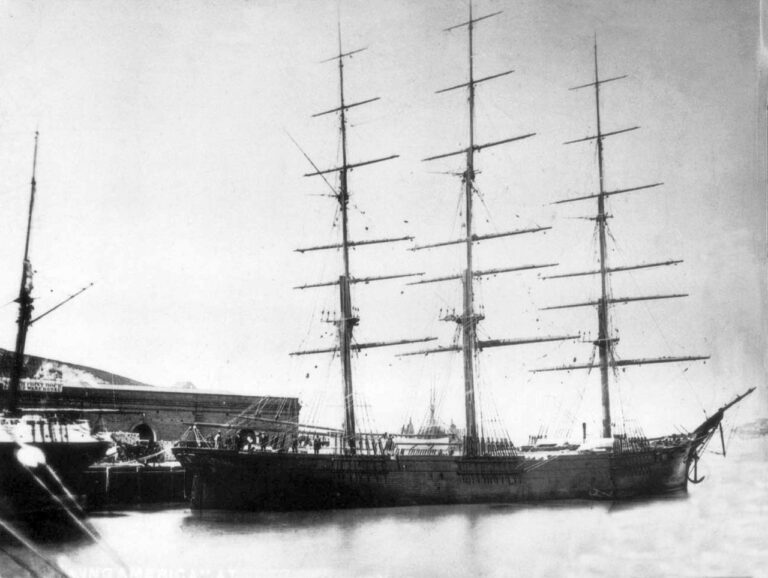
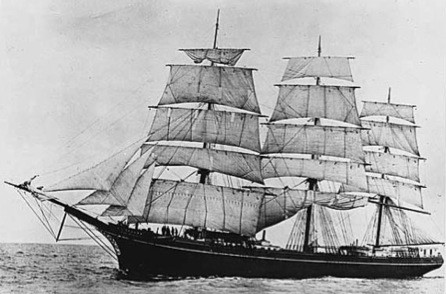
    Launched as the Young America in 1853, the medium clipper was noted for “her beautiful lines and general handsome appearance……not exceeded by anything afloat.” She proved to be very popular with shippers, but, after three decades at sea, she was sold to Austrian interests and renamed Miroslav. In 1886, she sailed from Philadelphia, bound for the Adriatic port of Fiume, and vanished.

  • Donbass

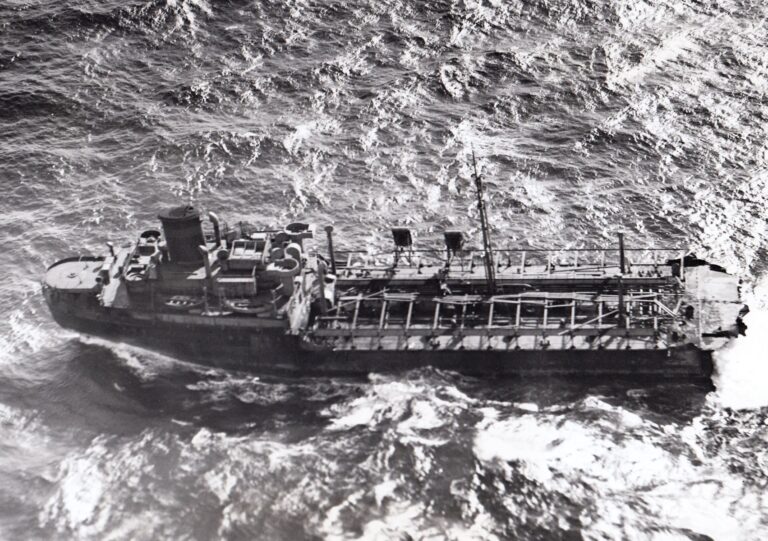
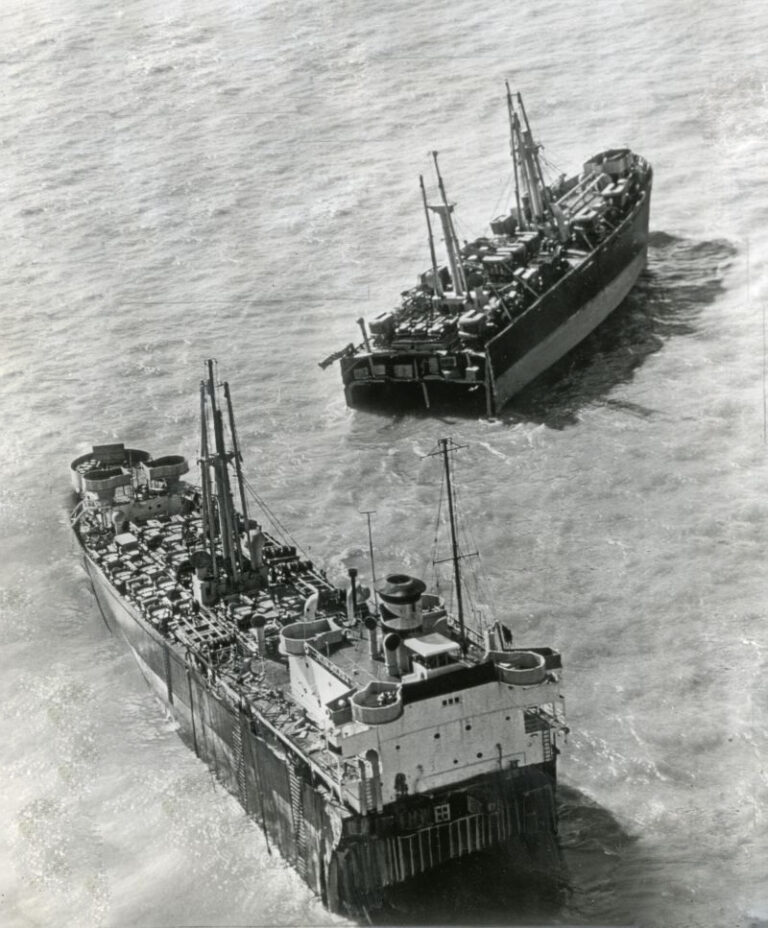
    In February 1946, the stern section of the Russian tanker Donbass was recovered after the ship split in two in a Northern Pacific storm. Towed to the U.S. West Coast, the stern was later acquired by Pacific Gas & Electric and moved to Northern California where her working power plant was used to supply electricity to the City of Eureka for more than a decade.

  • Mystery

    One of the hundreds of blunt-nosed, cargo-hauling scow schooners that plied San Francisco Bay and its smaller, attached bays in the late 19th and early 20th centuries, the scow schooner Mystery was caught in a terrific storm that struck San Pablo Bay in March 1907. Tragically, the small two-master was lost along with her captain, Damien Espinosa, and crew, his three daughters, Isabel, Jesucita, and Grace.

  • A. J. Fuller

    Anchored in Seattle harbor and loaded with a $500,000 cargo of canned salmon, the three-masted, full-rigged A.J. Fuller went to the bottom on October 30, 1918, after being rammed in a dense fog by a Japanese steamship. She sank in just ten minutes with a 10-foot-wide hole punched into her bow.

  • May Flint

    On the evening of September 8, 1900, the barque May Flint, called “the ugliest square rigger that ever sailed the seas,” sailed into San Francisco Bay and crashed the party being held to celebrate the 50th anniversary of California being admitted to the Union. Out of control and in front of thousands of awed witnesses, she went to the bottom in just 20 minutes after crashing into a U.S. Navy battleship and another ship anchored close-by.

  • Helena Modjeska

    Named for the internationally famous, 19th-Century Polish-American stage actress and philanthropist, the Liberty-type freighter Helena Modjeska was wrecked in September 1946 when a tremendous gale drove her onto the treacherous Goodwin Sands off the coast of Kent in southeast England.

Leave a Reply

Your email address will not be published. Required fields are marked *