Donbass
The T2-SA-E1-type oil tanker Beacon Rock was built in 1944 at Kaiser’s Swan Island shipyard near Portland, Oregon. Originally owned by the U.S. War Shipping Administration (WSA), the 523-foot, 10,448-ton tanker was transferred to the Soviet Union a few months after she was launched.
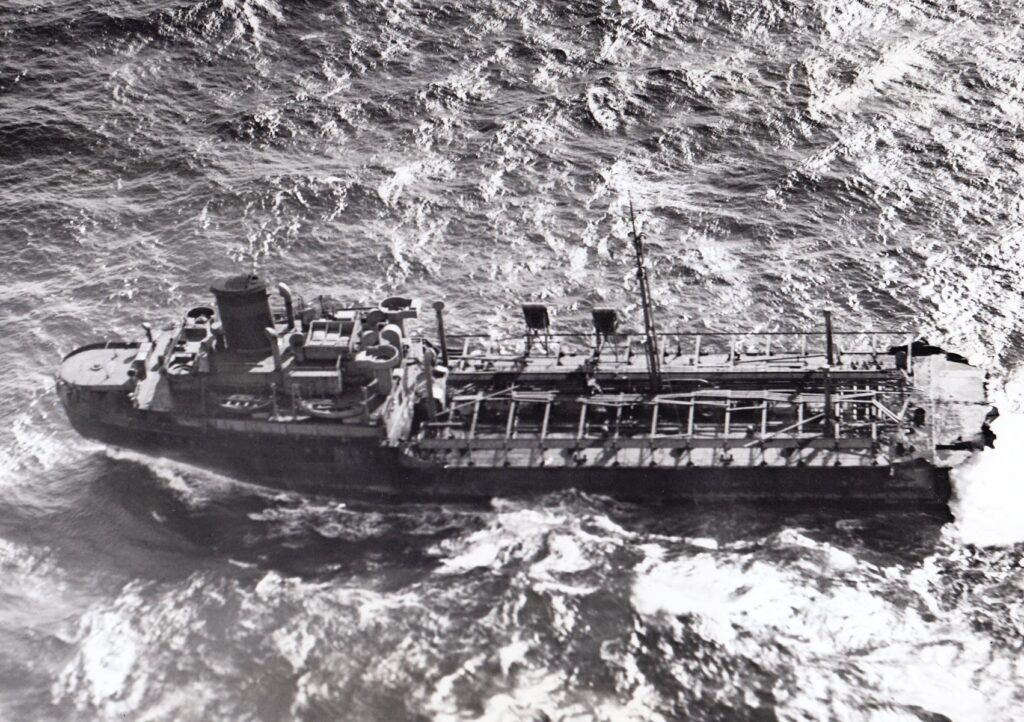
Renamed Donbass, she carried oil and deck loads of aircraft from the U.S. West Coast to port of Vladivostok on the USSR’s Pacific coast.
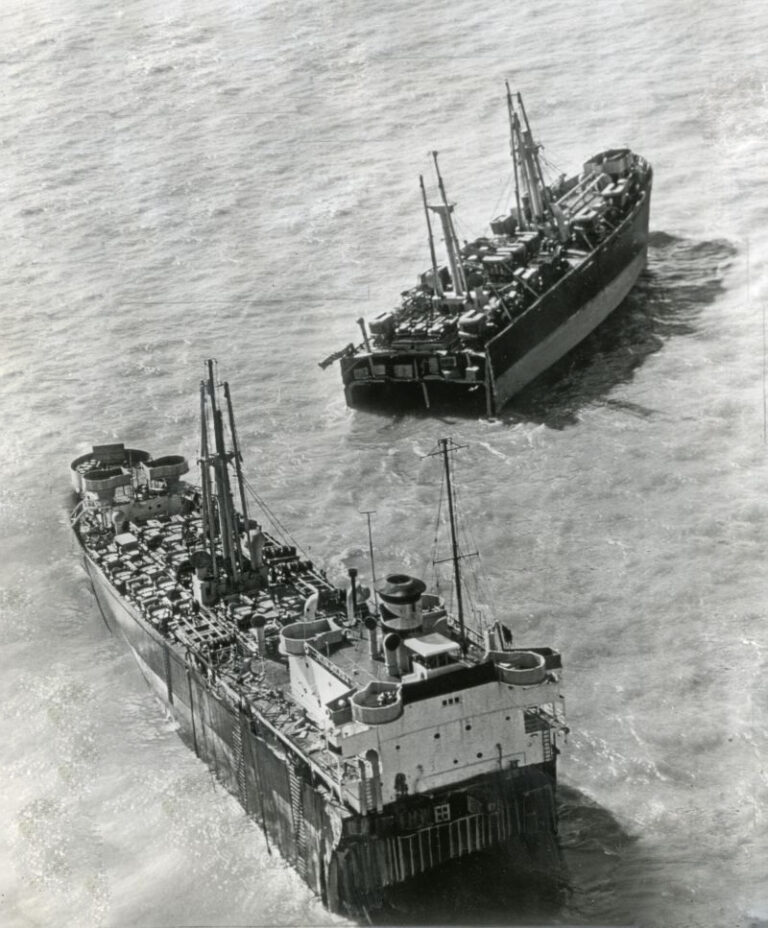
On February 17, 1946, the tanker was on a voyage from San Pedro to Vladivostok when she broke in half in the Gulf of Alaska, about 300 miles southeast of Adak. Fourteen crew members, plus her captain, were lost.
The stern remained afloat and, five days later, another tanker, the Puente Hills, arrived on scene, took the surviving 23 crew members and passengers aboard.
Five days later the tanker Puente Hills sighted the distressed vessel’s flares, found the stern half, put a line aboard, and then took the Donbass’ stern section on a difficult tow for Puget Sound that lasted 26 days.
Among those pulled off the ill-fated Donbass’ stern section was Galina Pervina, the tanker’s stewardess.
Wife of a Soviet Army officer on duty in Berlin, Pervina gave birth to a 7-pound girl, Titiana, with the help of one of the Puente Hills’ officers who assisted with the delivery while receiving radio instructions from the U.S. Coast Guard in Seattle.
The Puente Hill‘s crew and her operator, the General Steamship Corporation, claimed the wreck as a prize and their claim was upheld by a Federal Court. The prize fund was established when the WSA paid $110,000 to buy back its own vessel.
Soon after, Pacific Gas & Electric bought the Donbass‘ severed stern at an auction for $125,000 and later had it towed down the coast to Eureka, California.
For the next 10 years, she served as a floating electrical generator with her 6,700-horsepower steam turboelectric powerplant augmented PG&E’s electricity supply to the city via a bank of transformers on the adjacent dock.
By the late 1950s, the utility company was well into plans to build a 65-megawatt nuclear power plant south of Eureka, near the mouth of Humboldt Bay, to supply electricity to much of northern California.
As a result, the Donbass was deemed superfluous and in January 1959, she was towed to the National Metal & Steel Corp. scrap yard on Terminal Island at the Port of Los Angeles and scrapped.