Helena Modjeska
The Liberty-type cargo ship Helena Modjeska was built in 1944 at the Delta Shipbuilding Company shipyard in New Orleans, Louisiana.
The 7,176-ton, U.S-flag freighter was one of 188 Liberty ships built at the yard during World War II and was launched on November 25, 1944, just 61 days after her keel was laid.
She was named for the internationally famous, 19th-Century Polish-American stage actress and philanthropist noted for her roles in Shakespearean dramas and tragedies.
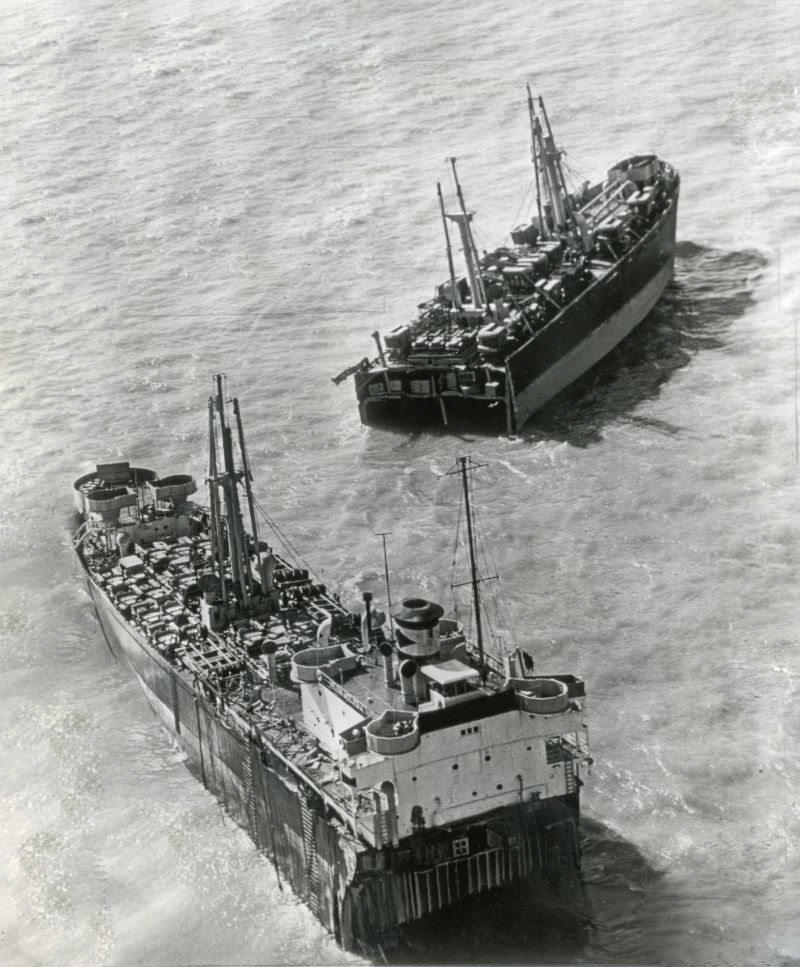
On September 12th, 1946, on voyage from Marseille to Bremerhaven with U.S. Army vehicles lashed to her deck and food stores stored in the hold, she encountered the worst gale to strike the region in decades and was driven on to the infamous Goodwin Sands, the 10-mile long sandbank off the coast of Kent in southeast England.
Though a large portion of the wrecked ship’s cargo was salvaged, several tons of goods including food stuffs ─ reportedly enough to feed 2,400 people for a week ─ were reportedly pilfered by locals.
The stolen goods included 721 tons of corned beef; 160 lbs. of tea; and cases of evaporated milk; canned peaches, tomatoes, peas and pineapple; powdered eggs; gelatin; bacon; pork sausages; chocolate; and lemon juice powder.
In the end, 35 individuals were brought up on charges of “obtaining for household consumption a quantity of rationed food otherwise than in accordance with Ministry of Food regulations.”
Among those charged with pilferage was a Justice of the Peace who also served as employee of the Dover-based representative of Lloyd’s of London.
Following a lengthy hearing, all of the charges were dismissed.
Eight tugs attempted to pull the stricken Helena Modjeska off but failed in the attempt. Her back broke and she eventually broke in half with her bow and stern eventually refloated and towed to River Blackwater. Rejoining the two sections of the ship was deemed impractical and they were eventually sold and scrapped at Grays, Essex.
According to several sources, a pair of German prisoners who had escaped from a prisoner of war camp and had stowed away in one of the Helena Modjeska’s cargo holds managed to escape during the storm but were recaptured later by the police.
After he left the doomed ship, her master, Capt. William H. Curran, was given a room to rest at the Commercial Hotel in nearby Ramsgate, and, in a sad postscript, just a few days after the wreck, he was found dead in his hotel room.
The coroner listed “natural causes,” but several members of his crew said that Curran, devastated by the loss of his ship and the death of his son a few months previous, had died of a broken heart.