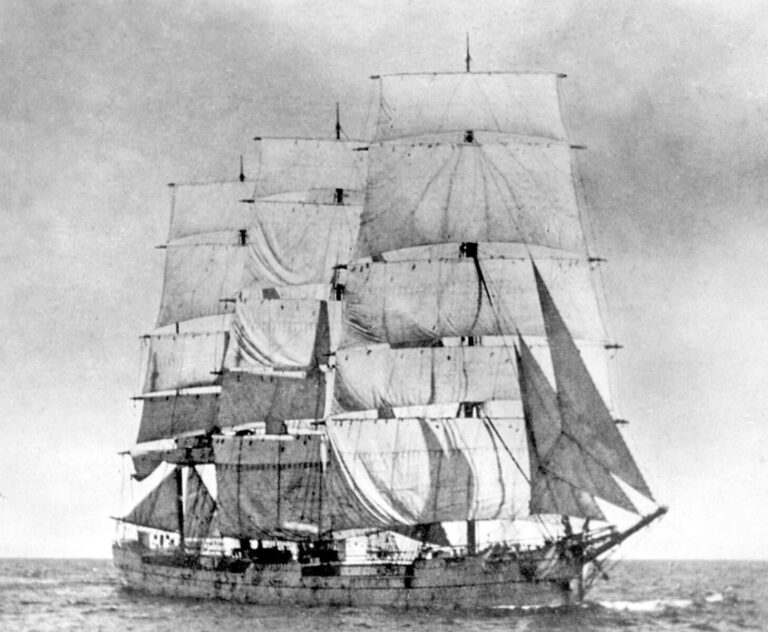
A. J. Fuller
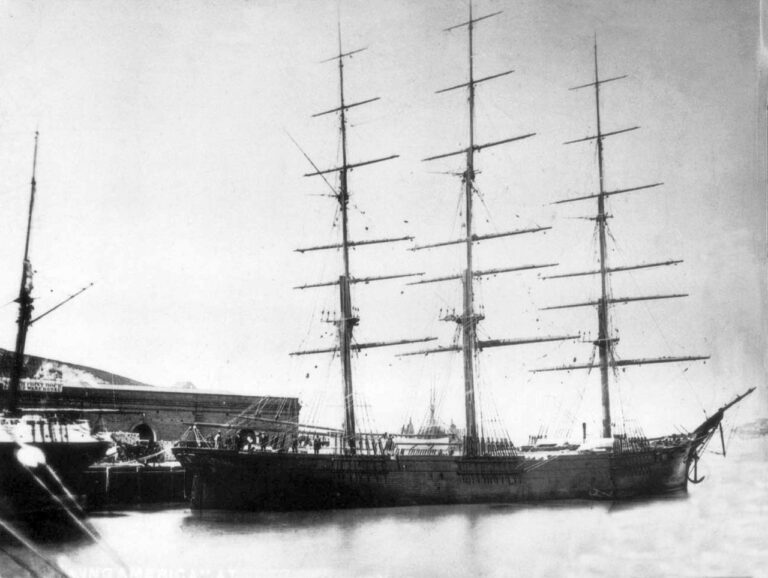
A report from Seattle in the Los Angeles Herald of October 30, 1918: “The full-rigged ship A. J. Fuller lies in 30 fathoms of water in the harbor here as a result of being rammed by the freighter Mexico Maru in a dense fog early today. The Fuller carried canned salmon. Only the mate and a watchman were aboard at the time of the accident and they were taken off safely.
“The Fuller’s cargo, consigned to P. M. Nelson of San Francisco, was valued at $500,000.“
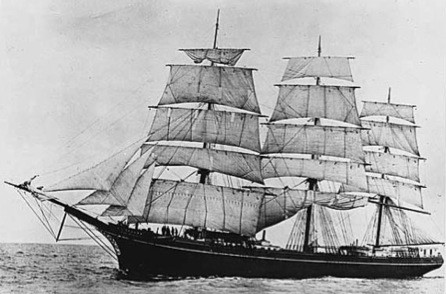
On December 13, the San Pedro News Pilot reported that, “The underwriters have under consideration a plan for raising the Northwestern Fisheries Company’s ship A. J. Fuller, which was rammed and sunk in the Seattle harbor with the loss of $500,000, worth of Alaskan canned salmon by the Osaka Shosen Kaisha’s Mexico Maru.
“The Fuller is lying at a depth of forty-one fathoms. It is planned to sweep the bottom of the bay with heavy steel lines and, if possible, get cables under the bow and stern of the ship. W. T. Cleverdon, a San Francisco marine wrecker, who has been engaged in salving the steamer Bear near Eureka, arrived today in connection with the Fuller loss.”
According to the San Pedro News Pilot of November 6, “Efforts to raise the full rigged ship A. J. Fuller of the Northwestern Fisheries company, which sank in Seattle harbor a year ago following a collision with the steamship Mexico Maru, carrying with her a cargo of canned salmon and barreled fish valued at $500,000, will be begun next week by a crew of salvage experts from San Francisco.
“With a large amount of deep-sea diving gear aboard, the little power craft Wopoc, formerly the United States Coast Guard cutter Hartley, sailed from San Francisco Friday morning for this port.”
The collision between the two ships reportedly occurred in a dense fog. Despite the Japanese freighter putting her engines full astern after the Fuller was sighted, the two ships struck with a 10-foot-wide hole punched into her bow and she went to the bottom in just ten minutes.
The 229-foot long A.J. Fuller was built in 1881 by Flint & Chapman at the company’s shipyard in Bath, Maine, and was under the command of Capt. C. M. Nichols when she was lost.