City of Chester
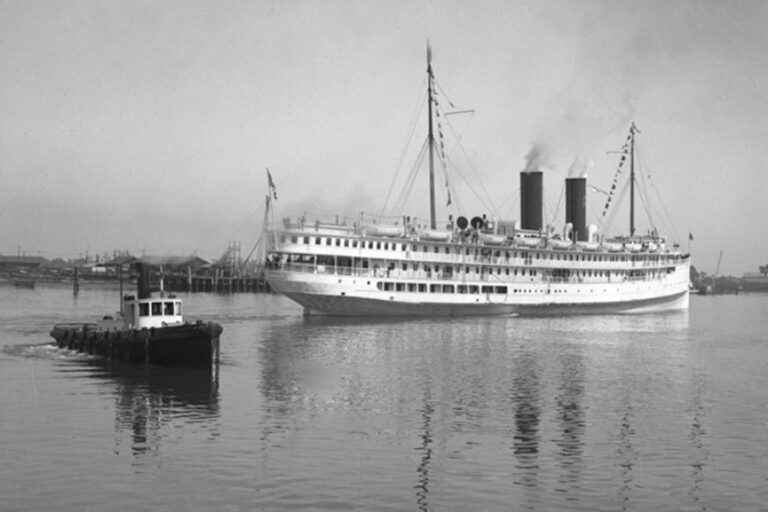
For years, the Pacific Coast Steamship Company’s City of Chester had served the lumber ports that dotted Humboldt Bay in Northern California with cargo and passenger service.
The steamer was outbound from San Francisco the foggy morning of August 22, 1888, when she was rammed off Fort Point by the British-flag passenger liner Oceanic.
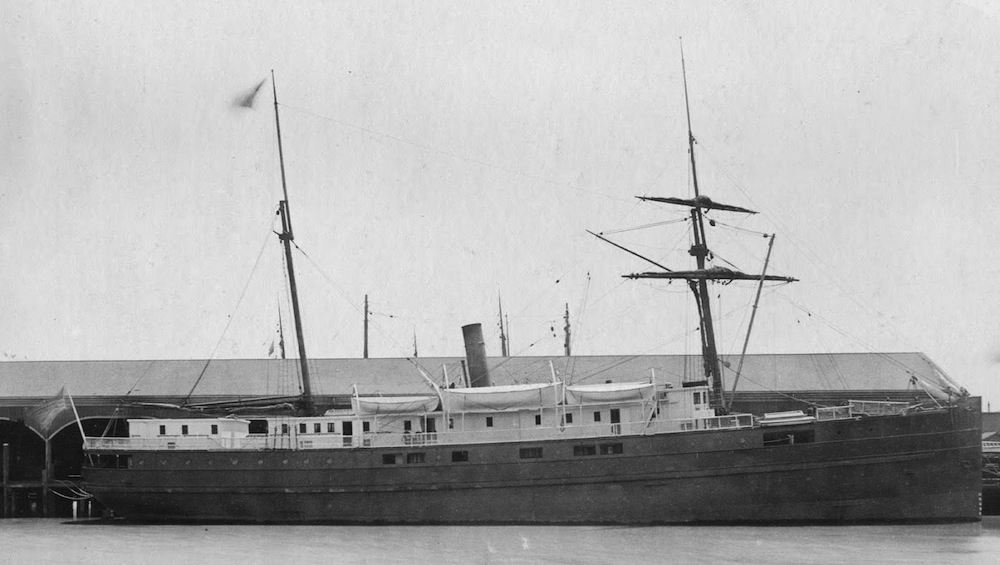
The ship’s boilers exploded as she went to the bottom of the San Francisco Channel taking 24 passengers and crewmen with her.
Two weeks after the wreck, the Daily Alta California, reported that, “Coroner Stanton commenced an investigation into the circumstances attending the death of those drowned at the recent collision of the steamers Oceanic and City of Chester on the bay.
“The coroner, before beginning, stated that he was unable to make a full investigation, as the Supervisors had denied him the assistance of a stenographer, deeming the two investigations by the British Consul and Inspector of Hulls sufficient.
“The evidence taken yesterday was only a repetition of the previous testimony at the other inquiries, and the jury found a verdict to the effect that they were unable to say who was to blame or how the disaster occurred.”
Recriminations few back and forth as the Masters of both ships said they had given the proper signals to avoid the collision and the ship’s crew was, alternately, accused by some of cowardice and incompetence and lauded by still others as heroes.
But there was agreement on all sides regarding the heroic conduct of one particular seaman aboard the Oceanic, who drew praise and a commendation from the Court of Inquiry called to investigate the collision which sent the City of Chester to the bottom of San Francisco Bay.
With the ship going down, the crewman had unhesitatingly dived from the liner’s deck into the debris-filled water to save a struggling two year old boy from drowning.
The crewman’s name was Ah Lung, and for a Chinese to be given any credit at all for anything whatsoever was highly unusual at a time when, sadly, strong anti-Chinese sentiment infected not only California, but the rest of the country as well.
Despite the prejudice, though, a letter to the San Francisco Chronicle, succinctly framed a sentiment held by many: “In connection with our recent steamship disaster…I refer to the bravery of the Chinaman who rescued the little boy from drowning at the imminent risk of his own life. We are not at all partial to the Chinese and have not a very high opinion of their courage, yet such an act is the one unnoticed and is worthy of our recognition…Honor to whom honor is due…”
Repeated efforts to find the wreck of the City of Chester over the years since her sinking in the turbulent waters of the current-wracked Bay failed until May 2013, one hundred and twenty five after the went to the bottom.
While attempting to find another wreck, the National Oceanic & Atmospheric Administration, working with information researched by maritime historian and shipwreck expert James Delgado his team, conducted a multi-beam sonar survey and a sonar target the right size and shape of the sunken liner was found.
Nine months or sorting through data followed with the announcement that the wreck was indeed that of the City of Chester, sitting upright, 216 feet deep at the edge of a small undersea shoal.
A ship tragically lost and finally found.