Frank Jones
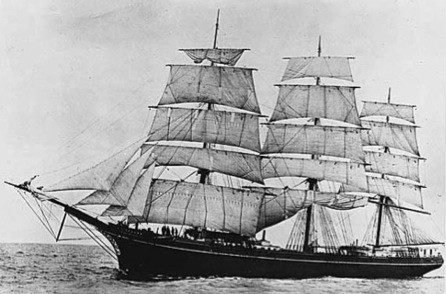
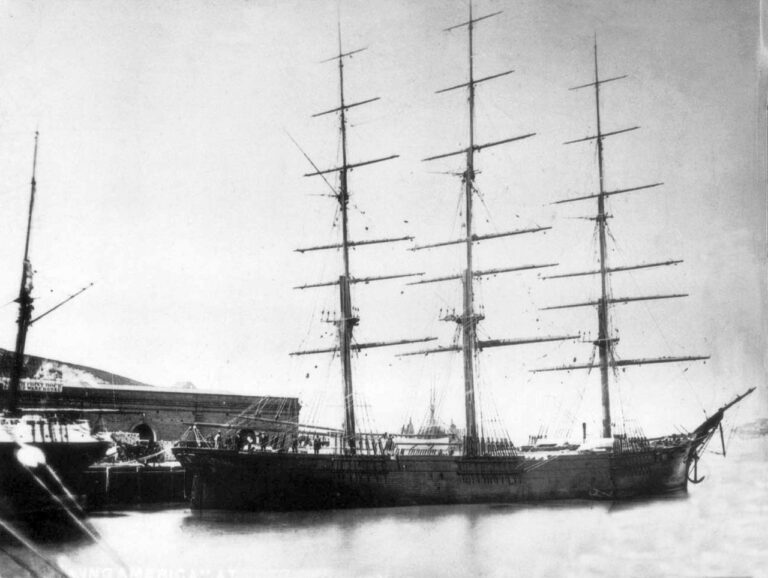
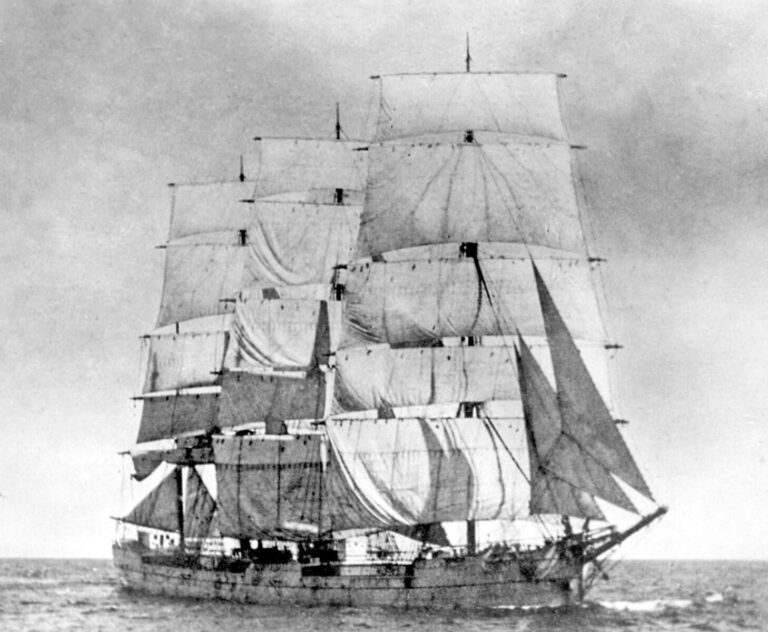
The 1,453-ton, full-rigged Frank Jones, named for a prominent Portsmouth, New Hampshire, businessman, was launched there in 1874 and was so well-designed and constructed that she was given the highest rating possible by Lloyds. Her owners routinely employed her on the route between New York and San Francisco and, thence to Liverpool with a return to New York.
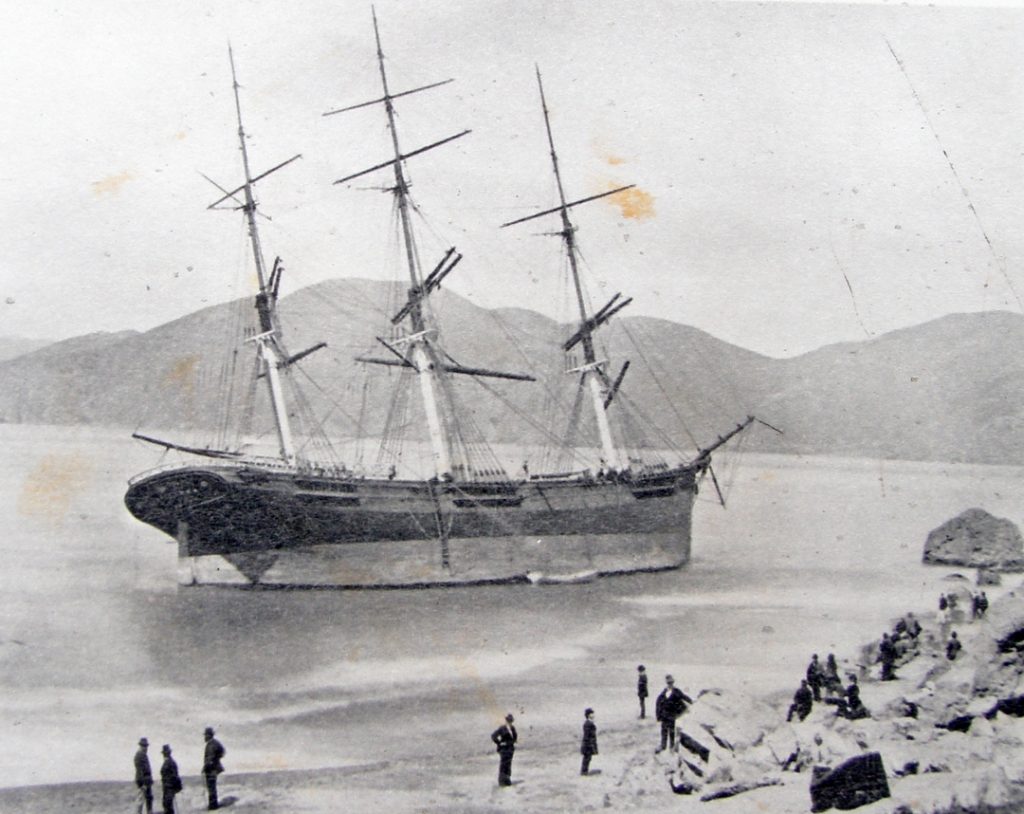
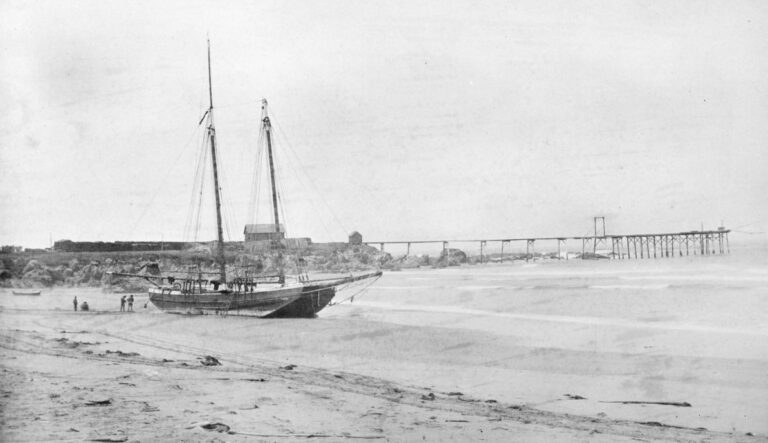
On March 30, 1877, while under the command of Capt. James N. Nickels, the Frank Jones had just completed her third voyage to California from New York when she was wrecked near Fort Point while clearing the Golden Gate outbound from San Francisco.
A strong gale was blowing when, under tow of the tug Monarch, the hawser parted. Another was quickly rigged, but it also separated under the strain. Her anchor was dropped, but its cable proved to be too short to secure the ship and the Frank Jones was carried ashore just south of Fort Point. Two attempts to bring her off the beach failed despite favorable conditions.
The day after she was wrecked, the San Francisco Bulletin, reported that, “A bar of sand has formed on the lee side of the vessel, along which a person can walk dry shod from the beach to the ship during low tide. The ship’s keel and bottom have been literally torn to splinters by the rocks on which she rests, and large pieces of the crushed timbers have floated ashore. It is believed that nothing can be saved except the rigging, chains, anchors, and upper works. Thousands visited the scene of the wreck yesterday.”
On April 2, the Frank Jones, stripped of her spars, rigging and fittings, was sold at an auction held at the Merchant’s Exchange in San Francisco for $4,750, but, after several attempts to pull her free failed, the wreck was reportedly sold again for $700. She had cost $75,000 to build.
According to the Weekly Humboldt Times, the rigging salvaged from the wreck of the Frank Jones was later installed on the ship Olympus, which was built in 1880 at Seabeck, Washington Territory, for the coastal lumber trade.
Maritime historian Frederick C. Matthews later wrote that, “considerable controversy arose as to the cause of the disaster, charges being made that the action of the towboat in taking the ship close to the south shore was ill-advised, but this was refuted, the counterclaim being made that both the parted towing hawsers belonged to the ship and were defective or of insufficient strength.”
In the end, responsibility for the loss of the Frank Jones was never determined with the insurance companies left on the hook for $63,000.
After the wreck of the Frank Jones, Captain Nickels, her last Master, was given command of the bark T. F. Whitton, which was lost on the coast of Cornwall, England, in February 1881, while bound from Portland, Oregon, to Falmouth, for orders. He finally retired from the sea six years later.